
Specifications
Scientific name: Lindera umbellata
Family: Lauraceae
Extraction part: Branch and leaf
Extraction method: Steam distillation
Note: Middle note
Main components: Linalool, alpha-pinene, geranyl acetate, 1,8-cineole, etc.
Place of origin: Aizu region, Fukushima Prefecture, Japan
Component composition may vary by lot.
Overview
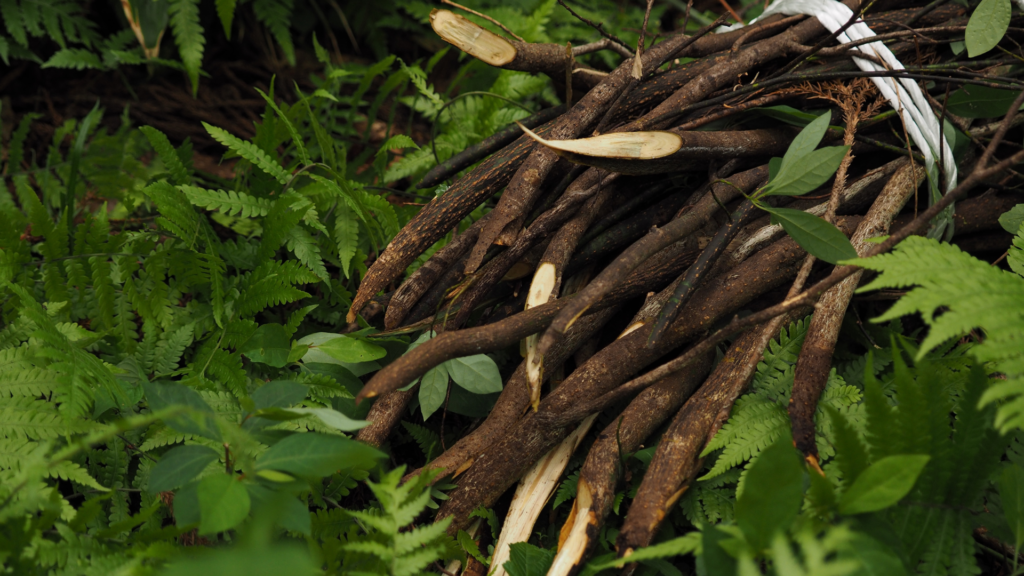
Kuromoji essential oil is obtained by steam distillation from the branches and leaves of Lindera umbellata, an aromatic tree endemic to Japan. The name “Kuromoji,” meaning “black letters” in Japanese, is said to originate from the distinctive dark patterns found on its young green branches. Kuromoji is widely distributed throughout Honshu, Shikoku, and Kyushu, and the aroma of its essential oil is known to vary subtly depending on the region where it grows. In northern regions, including Aizu and parts of Tohoku, related species such as Oba-kuromoji can also be found, contributing to further regional diversity in aroma characteristics.

Aroma Characteristics
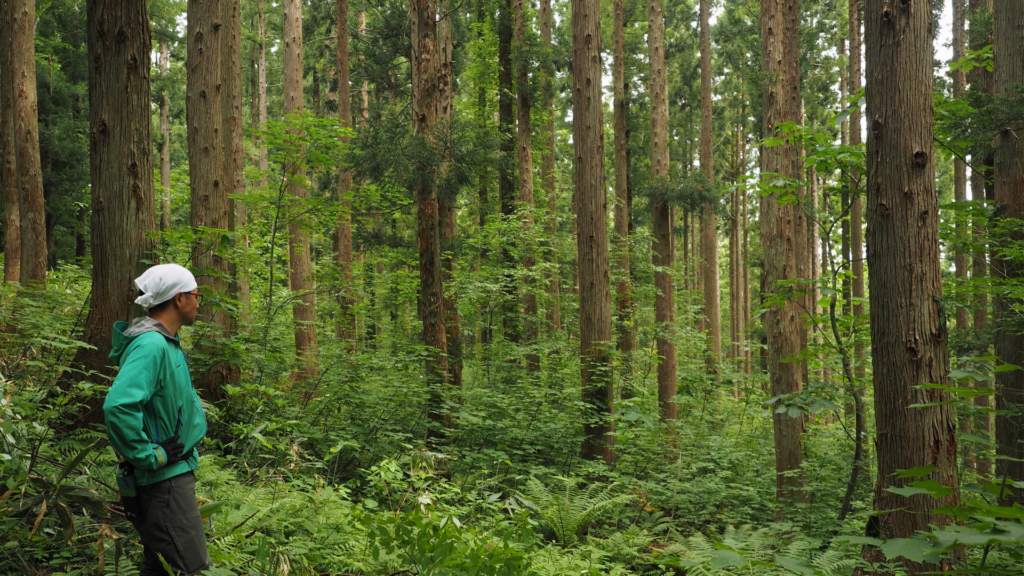
The aroma of Kuromoji essential oil is characterized by a fresh and clean woody note, accompanied by gentle sweetness and a mild spicy nuance. Rather than being bold or overpowering, it provides balance and depth to aromatic compositions. Its light, transparent impression allows it to blend smoothly with other materials, making it suitable for refined formulations and delicate fragrance structures. In natural forest environments, Kuromoji releases its fragrance simply by breaking a branch or rubbing its leaves, evoking the calm and clarity of the forest air.
Traditional Use and Cultural Background
The trunk and branches of Kuromoji have traditionally been used as herbal materials under the names “Usho” and “Chosho” in Japan. While it has not been widely utilized in traditional Chinese medicine, Kuromoji has long been familiar to Japanese people and has been used for various purposes. It is perhaps best known internationally as the material used for high-grade Japanese toothpicks. It is also said that lumberjacks and hunters once chewed Kuromoji branches in the forest to refresh themselves and maintain oral hygiene, enjoying its gentle aroma during long hours of work.
Production and Supply
Kuromoji is a challenging material to collect, and its essential oil yield is relatively low. From approximately 100 kilograms of raw material, only about 0.1 to 0.2 percent of essential oil can be extracted, resulting in roughly 100 to 200 grams of oil. At Jyuhachinichi, raw materials are collected with permission during forest management and tree cutting activities, but gathering 100 kilograms of branches and leaves requires many hours of labor by experienced workers. Due to these factors, Kuromoji essential oil cannot be mass-produced and represents a concentrated gift of the forest. While production is managed with a focus on maintaining consistent quality, availability and supply conditions may vary depending on the lot and harvest conditions.
Quality and Compliance
GC/MS analysis and Safety Data Sheets (SDS) are available. Quality is managed on a lot-by-lot basis, and additional technical information, including allergen-related details, can be provided upon request.
Applications
Kuromoji essential oil is used in fine fragrance, aromatherapy, personal care formulations, and home fragrance applications. Its calm and well-balanced aroma is often selected for compositions intended to create a relaxed and comfortable atmosphere.
Availability and Inquiry
For inquiries regarding availability, samples, or technical documentation of Kuromoji essential oil, please contact us via the Contact page. We may also be able to arrange Japanese essential oils not listed in our current lineup.